Written By: Darko
The forklift size depends on your load weight, lift height, and working environment. A standard 2,500–5,000 kg capacity forklift suits most warehouse operations. Outdoor or heavy industrial sites require 6,000 kg or above. Wollongong Forklift & Access Services recommends assessing your heaviest load and maximum required lift height before selecting equipment.
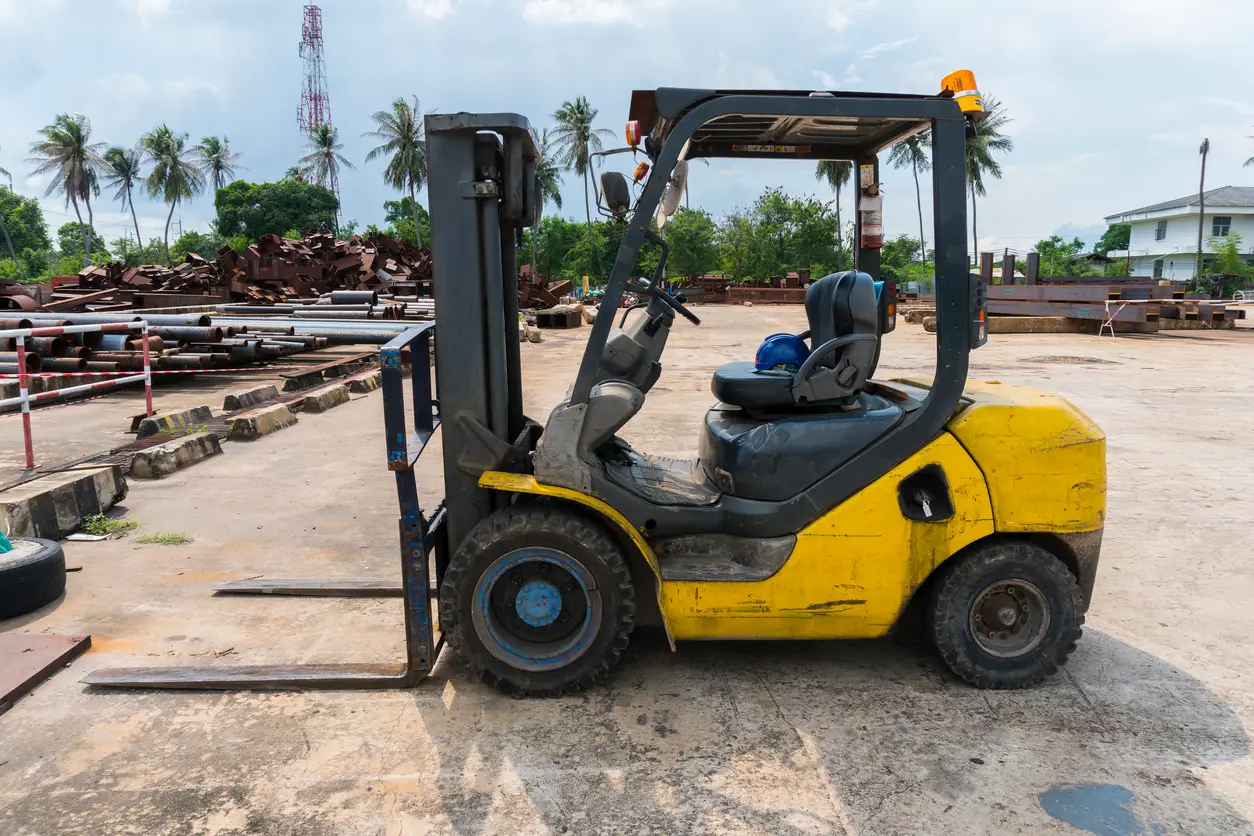
Forklift size depends on the weight and dimensions of your load, with capacities ranging from around 3,000 lbs. for lighter warehouse tasks up to over 50,000 lbs. for heavy industrial applications. A standard warehouse forklift rated at 5,000 lbs. measures approximately five feet wide, seven feet tall, and ten feet long with standard forks.
Forklift size depends on three factors: your maximum load weight, your lift height, and your operating environment. A standard warehouse forklift with a 5,000-pound capacity measures roughly five feet wide, seven feet tall, and ten feet long. Match those dimensions to your aisle widths and ceiling clearance before selecting a machine.
Key Takeaways
- Standard warehouse forklifts weigh 5,000 pounds and measure approximately five feet wide, seven feet tall, and ten feet long.
- Forklift capacity ranges from 3,000 pounds at the lower end to over 50,000 pounds for heavy-duty applications.
- Load centre distance measures the horizontal space from fork face to load centre of gravity for accurate capacity ratings.
- Wollongong Forklift & Access Services in Albion Park, NSW provides equipment selection guidance for your specific operational requirements.
Why Does Forklift Size Matter So Much?
Choosing the wrong forklift size creates immediate safety risks and operational disruptions that cost businesses time and money. Forklift lifting capacity varies enormously across machine types. From light-duty units suited to small pallets right through to heavy-duty machines built for substantial industrial loads. So matching the right capacity to your specific task is not optional.
Get the size wrong, and you face two equally damaging outcomes:
- Under-capacity: The machine struggles with your loads, increasing the risk of tip-overs, mechanical stress and accidents.
- Over-capacity: You pay for capability you never use, inflating purchase price, fuel costs and maintenance bills.
Neither outcome is acceptable when your operation depends on uptime.
What happens if you choose a forklift that’s too small?
A forklift operating beyond its rated capacity becomes unstable. Mechanical failures become more likely, and the risk of workplace accidents rises sharply. Systematic maintenance checks help catch stress damage early. No servicing programme fully compensates for a machine that was undersized from the start.
Does forklift size affect more than just lifting?
Absolutely. Size determines aisle clearance requirements, floor-load tolerances and the environments where the machine can safely operate. A unit that fits your load weight. Not your racking layout creates bottlenecks just as damaging as a capacity mismatch.
This is precisely why choosing the right forklift starts with a thorough assessment of your operational needs, not a catalogue. Wollongong Forklift & Access Services matches reliable, high-quality machinery to each customer’s specific requirements, helping you improve both productivity and safety from day one.
What Is Forklift Lifting Capacity and Why Does It Matter?
Forklift lifting capacity is the maximum weight a forklift is rated to lift safely. Capacities span a wide range, from around 1,360 kg at the lighter end to well over 22,000 kg for heavy industrial machines, meaning the right choice depends entirely on your loads.
Get this wrong, and the consequences are serious. A forklift works like a seesaw: the machine’s counterweight balances the load on the forks. Place too much weight on the load side and the forklift tips forward. That is not a minor inconvenience; it is a workplace incident that injures operators, damages stock, and halts operations.
How much can a forklift lift, and how do I find my number?
How much a forklift can lift depends on the machine’s rated capacity, which is set by the manufacturer under specific test conditions. Before you start comparing models, identify the heaviest single load your operation will ever need to move. If your loads vary in size and weight, always plan around the heaviest one, not the average.
Follow these three steps before requesting a quote:
- Weigh your heaviest load. Include packaging, pallets, and any fixtures.
- Measure load dimensions. Width, depth, and height all affect how the machine handles the weight.
- Note whether load weights are consistent or variable. Variable loads require a higher capacity buffer.
Why is the forklift weight capacity rating a safety issue, not just a spec?
A rated capacity is a hard safety limit, not a guideline. Exceeding it shifts the seesaw balance past the tipping point, removing the stability the counterweight provides. This is why a forklift capacity guide and forklift buying guide always start with load data. Choosing the right machine begins with knowing exactly what you need to lift, not with browsing brochures.
Understanding capacity is the foundation of choosing the right forklift for your site. Every other specification- mast height, powertrain, tyres- comes second.
What Is a Forklift Load Centre and Why Does It Matter?
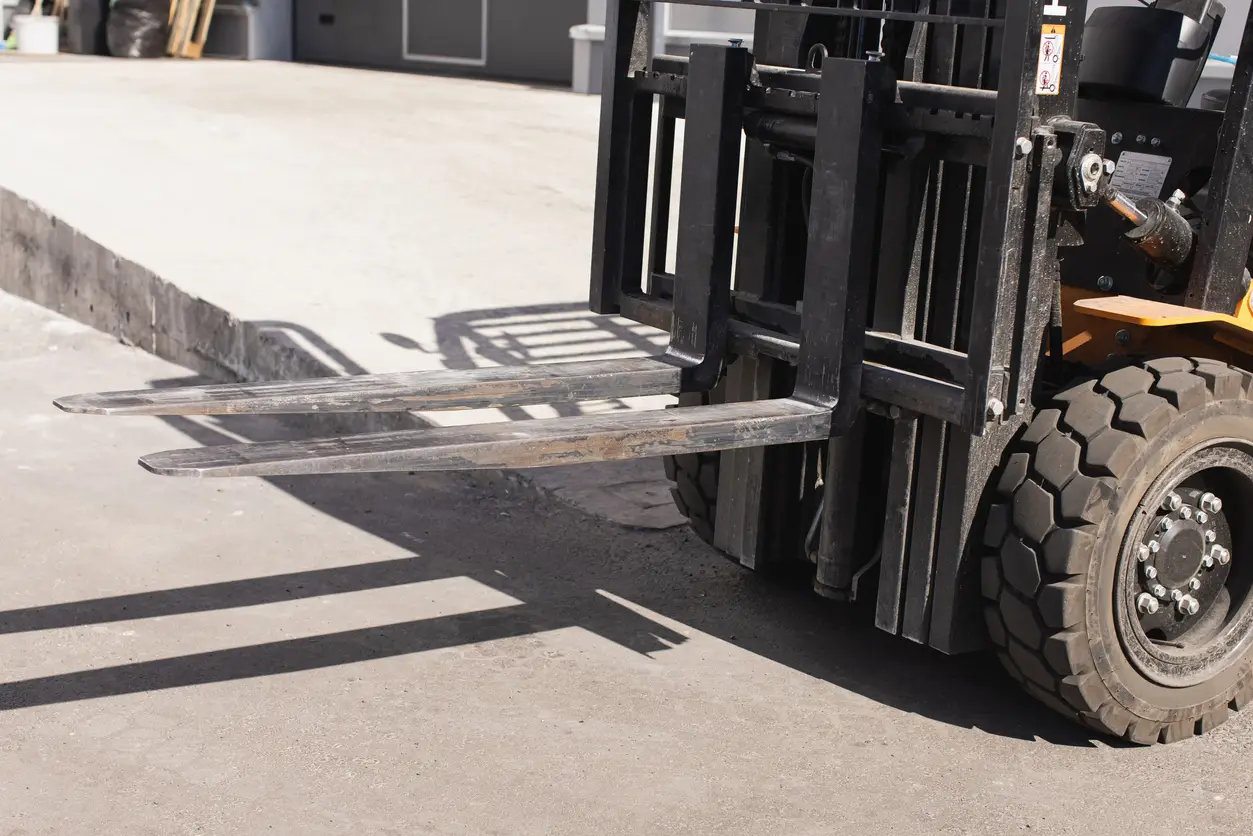
The forklift load centre is the horizontal distance from the front vertical face of the forks to the centre of gravity of the load. This measurement forms the foundation for rating a forklift’s lifting capacity. Get it wrong, and you risk overloading a machine that looks perfectly capable on paper.
The Industrial Lorry Standards Development Foundation (ITSDF) sets the standard load centre at 24 inches (approximately 600 mm) on most forklifts. That figure is the benchmark manufacturers use when they publish a machine’s rated capacity. So when a supplier quotes a forklift weight capacity of, say, 3,000 kg, that figure assumes your load’s centre of gravity sits no further than 600 mm from the fork face.
What happens when your load exceeds the standard load centre?
When a load’s centre of gravity extends beyond that 600 mm standard, the forklift’s effective forklift lifting capacity drops. Think of it like a seesaw: the further the weight sits from the pivot point, the harder the machine has to work to stay balanced. Wider, longer, or unevenly distributed loads shift the centre of gravity outward. And that directly reduces how much the forklift can safely lift.
Why does load centre matter when choosing the right forklift?
Understanding load centre is essential to choosing the right forklift for your operation. A machine rated at 3,000 kg may only lift 2,400 kg safely once your actual load dimensions are factored in. Before you commit to a purchase, measure your typical loads carefully, both weight and physical dimensions.
Here is a quick summary of what the load centre affects:
- Rated capacity — the published figure assumes the standard 600 mm load centre
- Effective capacity — reduces as load depth or uneven distribution pushes the centre of gravity outward
- Machine selection — a larger capacity class may be necessary even if your loads appear within range
Always verify load centre calculations before finalising any equipment decision.
What Are the Key Forklift Dimensions to Consider?
Three measurements determine whether a forklift fits your site: capacity, physical dimensions, and manoeuvrability. A standard warehouse forklift rated at around 5,000 pounds carries approximate dimensions of five feet wide, seven feet tall. Ten feet long with standard forks, but those numbers shift significantly as capacity increases.
Getting dimensions wrong is costly. A machine that cannot clear your racking height stalls operations. One too wide for your aisle blocks throughput entirely.
When you are asking what size forklift do I need, start by mapping your site before you look at any specification sheet. Measure aisle widths, doorframe heights, and floor-to-rack clearances. Then match those figures against the forklift’s physical footprint.
The three dimensions that matter most are:
- Width — determines whether the machine fits your aisles and doorways
- Height — must clear overhead structures, mezzanines, and racking systems
- Length — affects turning radius and how much floor space each manoeuvre consumes
Does manoeuvrability change depending on forklift size?
Manoeuvrability is directly tied to a machine’s physical dimensions and forklift weight capacity. Larger, higher-capacity forklifts require wider turning circles. If your site has tight corners or narrow bays, a physically smaller machine. Even one with a lower rated capacity. Often delivers better operational throughput than an oversized unit that struggles to turn.
How do dimensions affect which forklift is right for my site?
Choosing the right forklift means balancing all three considerations- capacity, dimensions, and manoeuvrability- against your specific site constraints. A machine that excels on one measure but fails on another creates bottlenecks rather than solving them. Aligning equipment choices with site constraints and compliance expectations. Performance goals require an honest audit of your operating environment before committing to any specification.
2.5 Tonne vs 3 Tonne Forklift: Which Should You Choose?
The 2.5t vs 3t forklift decision comes down to one thing: the heaviest load your operation regularly handles. Choosing a machine with insufficient forklift weight capacity creates both safety hazards and productivity losses that compound over time.
If your loads fluctuate, always size to the heaviest, not the average. A forklift that struggles at its rated limit wears faster, cycles slower, and puts operators at risk. That single miscalculation costs far more than the modest price difference between capacity classes.
How do I know if a 2.5 tonne forklift is enough for my operation?
A 2.5 tonne forklift suits operations where the heaviest pallet or unit load stays reliably below that threshold. Think light manufacturing, retail distribution, or smaller warehouses handling standard palletised goods. The moment your loads regularly approach or exceed that figure, you lose the safety margin that keeps operations compliant and equipment healthy.
When does a 3 tonne forklift make more sense?
A 3 tonne forklift gives you headroom. Operations in logistics, construction supply, or heavier manufacturing benefit from the additional capacity. Particularly when load weights vary shift to shift. Buying capacity you occasionally need is far cheaper than replacing a machine you consistently overwork.
Use this quick comparison to frame your decision:
| Factor | 2.5 Tonne Forklift | 3 Tonne Forklift |
| Typical load range | Up to 2,500 kg | Up to 3,000 kg |
| Best environment | Indoor warehouses, light industry | Mixed indoor/outdoor, heavier logistics |
| Powertrain options | Petrol, diesel, electric | Petrol, diesel, electric |
| Capacity headroom | Moderate | Greater |
Choosing the right forklift also means matching the powertrain to the environment. Petrol and diesel units suit outdoor yards and construction sites, whilst electric models keep indoor air quality safe and operating costs lower. Wollongong Forklift & Access Services stocks petrol, diesel, and electric forklifts across both capacity classes, so your environment shapes the shortlist alongside your load requirements.
Getting this decision wrong is expensive. The team at Wollongong Forklift & Access Services provides practical guidance on matching machines to task. Helping you avoid a costly mismatch before the purchase order is signed.
Which Forklift Type Suits Your Operating Environment?
Your operating environment determines your forklift type before load capacity or budget enters the conversation. Electric forklifts suit sealed indoor warehouses, whilst rough-terrain telehandlers are built for outdoor construction sites. And the gap between those two machines is enormous.
Different industries place entirely different demands on material handling equipment. Warehousing and logistics operations typically need compact, manoeuvrable machines that protect racking and flooring. Manufacturing sites often require higher lift heights and heavier capacity. Construction environments demand machines that handle uneven ground without compromising stability. Matching the machine to the environment keeps your team safe and your throughput consistent.
What forklift types are available for different work environments?
The range of equipment available covers far more than a standard counterbalance forklift. Depending on your site, you may need one of the following:
- Reach trucks — ideal for narrow-aisle warehouses with high racking
- Walkie stackers — suited to smaller storage areas with lighter loads
- Pallet trucks — efficient for ground-level movement across flat surfaces
- Telehandlers — designed for outdoor, rough-terrain applications such as construction sites
- Scissor lifts — used where elevated work platforms are required alongside material handling
Does powertrain matter when choosing the right forklift?
Powertrain choice is directly tied to the environment. Electric forklifts produce zero exhaust emissions, making them the correct choice for enclosed indoor spaces where ventilation is limited. Diesel and petrol machines deliver greater power for outdoor or semi-outdoor environments where fumes can disperse freely. Choosing the wrong powertrain creates compliance risks and, in enclosed spaces, genuine health hazards for your workforce.
Choosing the right forklift means mapping every variable, surface type, aisle width, lift height, and indoor or outdoor use before you compare models. If your operation spans both indoor and outdoor zones, you may need more than one machine class to cover the full scope of your site safely.
Should You Buy or Hire the Right-Sized Forklift?
Choosing the right forklift for your operation means more than picking the correct capacity; the acquisition method matters just as much. Buying locks in a long-term asset; hiring keeps capital free and gives you flexibility when workloads shift.
Neither option suits every business. The right choice depends on how frequently you need the machine and how long the requirement lasts. How much upfront investment your budget can absorb.
| Factor | Buy | Hire |
| Upfront cost | Higher | Lower |
| Best for | Permanent fleet needs | Short-term or variable demand |
| Flexibility | Fixed asset | Swap or return as needs change |
| Financing available | Yes | Typically included in hire terms |
When does hiring a forklift make more sense?
Hiring suits projects with a defined end date or operations where demand fluctuates seasonally. Flexible rental arrangements are available for both short-term projects and longer-term operational requirements. You are not forced into a rigid contract that outlasts your actual need. If your workload changes, you can adjust accordingly rather than carrying an underused asset on your books.
When is buying the better investment?
If a forklift is central to your daily operations, purchasing delivers better value over time. Competitive financing plans make acquisition straightforward for businesses of all sizes, spreading the cost. The machine pays for itself through productivity gains rather than straining cash flow in a single period. Ownership also means the asset sits on your balance sheet and depreciates in your favour.
The practical answer is this: match the acquisition method to your operational horizon. Short project or uncertain demand? Hire. Permanent throughput requirement? Buy, and explore financing to keep the decision financially manageable. Either way, getting the forklift weight capacity right first ensures the acquisition method you choose actually solves the problem you have.
How Do You Get the Right Forklift Recommendation?
Getting the right forklift recommendation starts with speaking to a specialist who understands your operational needs, not just your budget. A trusted, independent dealer matches equipment to your site constraints and load requirements. Compliance expectations, reducing the risk of buying the wrong machine and losing productivity from day one.
Wollongong Forklift & Access Services operates as an independent, Australian-owned dealer committed to building long-term client relationships through tailored solutions and transparent advice. The team provides quote-based recommendations grounded in your specific requirements, then backs those recommendations with local delivery. Ongoing support designed to keep downtime to a minimum.
What Information Should You Bring to a Forklift Consultation?
Arriving prepared makes the consultation faster and the recommendation sharper. Bring the following details:
- Forklift weight capacity required — the maximum load weight you lift regularly
- Forklift load centre measurement — the horizontal distance from the fork face to your load’s centre of gravity
- Aisle widths, floor surfaces, and any height restrictions on your site
- Whether you need indoor, outdoor, or mixed-environment operation
- Your expected hours of use per day or week
The more precise your figures, the more accurately a specialist can apply a forklift capacity calculator approach to shortlist the right machine.
Does Location Affect the Quality of Support You Receive?
Location matters more than most buyers realise. A dealer based close to your operation responds faster, delivers sooner, and understands regional site conditions. Wollongong Forklift & Access Services is based in Albion Park. Serves businesses across the Illawarra region, providing genuinely local support rather than a distant call centre.
That proximity translates directly into faster response times, on-site servicing, and practical guidance from people who know the area. When equipment goes down, local support keeps your operation moving.
Selecting the right forklift size requires careful consideration of your load capacity, workspace dimensions, and operational demands. By assessing these factors systematically, you establish a foundation for improved productivity and safety across your site. Our team at Wollongong Forklift & Access Services brings local expertise to guide your decision, ensuring the equipment you choose aligns precisely with your business requirements. Delivers reliable performance for years to come.
FAQ
What weight range do forklifts cover?
Forklift capacities range from around 3,000 lbs. for heavy industrial applications.
What three factors determine the right forklift size?
Maximum load weight, lift height, and operating environment determine the correct forklift size for your operation.
What happens if I operate a forklift beyond its rated capacity?
The machine becomes unstable, mechanical failures grow more likely, and the risk of workplace accidents rises sharply.